


How to Style and Stack Jewellery: A Sydney Jeweller's Guide
Jewellery stacking has become the default way to wear fine jewellery. Rather than a single statement piece, the modern approach is layered, personal, and built over time: a ring stack that tells a story, layered necklaces at different lengths, a wrist that mixes textures and metals. The result looks effortless, but a little know-how goes a long way.
This guide covers everything you need to know about how to stack rings, layer necklaces, and build a jewellery wardrobe that works together across every occasion.
Why Jewellery Stacking Has Become the Default Way to Wear Fine Jewellery
The shift from single-piece dressing to curated ring stacks and layered looks reflects a broader change in how people think about jewellery. A single statement piece is still a strong choice, but stacking allows for something more personal: pieces collected over time, mixed across metals and textures, each with its own meaning.
It is one of the clearest jewellery trends 2026 has produced, and it shows no signs of slowing. At Armans Fine Jewellery, we have spent over 45 years watching how our customers actually wear their pieces. The customers who get the most out of their jewellery are almost always the ones who know how to mix and layer it.
How to Stack Rings Without It Looking Cluttered
Start with an anchor piece and build outward
The key to a clean ring stack is starting with an anchor: your engagement ring, a signet, or a bold statement ring you want to feature. Everything else builds around it. This gives the stack a focal point rather than spreading attention across too many pieces at once.
On the finger next to your engagement ring, a plain wedding band on one side and a textured or pavé band on the other is a classic starting point. From there, you can extend to adjacent fingers with lighter, thinner pieces.
Vary width and texture
The most flattering stacked rings combine different widths and finishes. Pair a plain solid gold band with a pavé band or a criss-cross diamond band. The contrast in texture is what makes the stack look considered rather than accidental.
The Orbit Double Diamond Ring is one of the strongest stacking pieces in the Armans collection: a criss-cross pavé band that pairs naturally with a plain wedding band or a slim solitaire on either side. It adds sparkle without competing with the anchor piece.

Shop the Orbit Double Diamond Ring
Browse Women's Wedding Rings and Bands
How many rings to stack on one hand
For everyday wear, two to three rings per hand tends to look polished without tipping into excess. If you are stacking rings across multiple fingers, keeping one finger as the statement and others quieter maintains balance. Four or five rings works for a deliberate maximalist look, but each piece needs to earn its place.
Mixing Metals: Is It Actually OK?
Yes. Mixing metals is not only acceptable in gold stacking rings and layered jewellery, it is actively encouraged. The key is to do it with intention rather than by accident.
The most wearable combinations are yellow and white gold, which sit naturally together, and rose gold with yellow gold, which shares enough warmth to feel cohesive. Mixing all three is bolder but works well when the pieces share a consistent design language, similar profiles, similar stone sizes, or a shared setting style.
At Armans, most pieces are available across 18ct rose gold, white gold, yellow gold, and platinum, which means you can build a mixed-metal stack from the same maker without any inconsistency in quality or finish.
Layering Necklaces the Right Way
Chain length order
The foundation of a good layered necklace stack is length separation. Each chain should sit at a clearly different point on the body: 40cm sits at the collarbone, 45cm below it, and 50cm to 55cm lower on the chest. When lengths are too similar they bunch together, and the layered effect is lost.
As a starting point, a 40cm choker-length chain or pendant, a 45cm fine chain necklace, and a 50cm or longer pendant or tennis necklace gives you three clear, distinct layers.
Mixing a pendant with a plain chain
A Diamond Initial Pendant or a Petite Diamond Cross Necklace on a 43cm chain works beautifully as the mid layer in a necklace stack. Above it, a fine plain chain at 40cm keeps the top layer subtle. Below it, a longer piece takes the eye further down and adds presence.

Shop the Diamond Initial Pendant
Browse all Diamond Necklaces and Pendants
Adding a tennis necklace as the statement layer
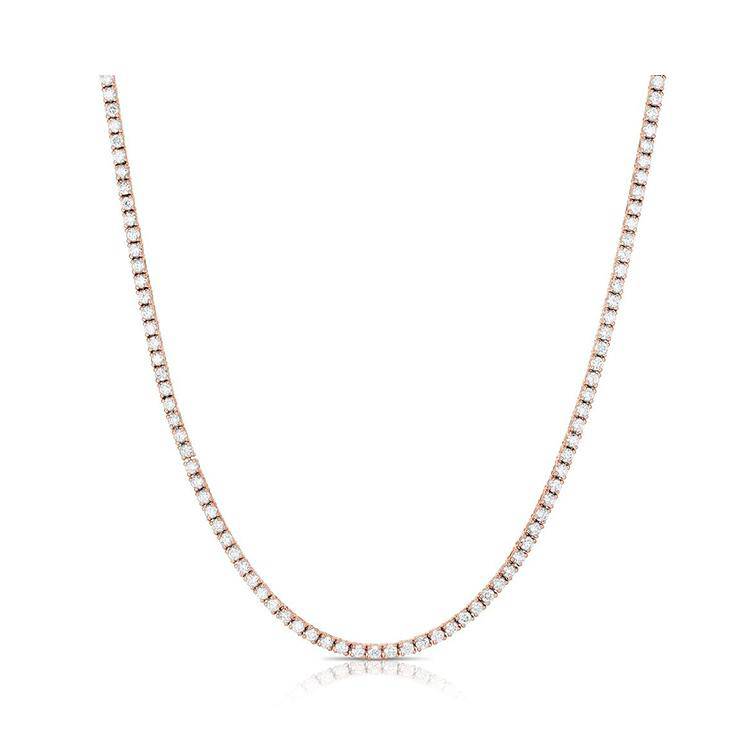
A tennis necklace works as the longest and most impactful layer in a stacked necklaces look. Worn at 50cm or longer, it sits below lighter pendant layers and anchors the stack with continuous diamond brilliance.
The Uniform Tennis Necklace is one of the most versatile pieces for layering: clean enough to sit alongside delicate chains without overpowering them, and substantial enough to carry the stack on its own when the other layers come off.
Shop the Uniform Tennis Necklace
Shop the Uniform Tennis Necklace
Bracelet and Earring Stacking
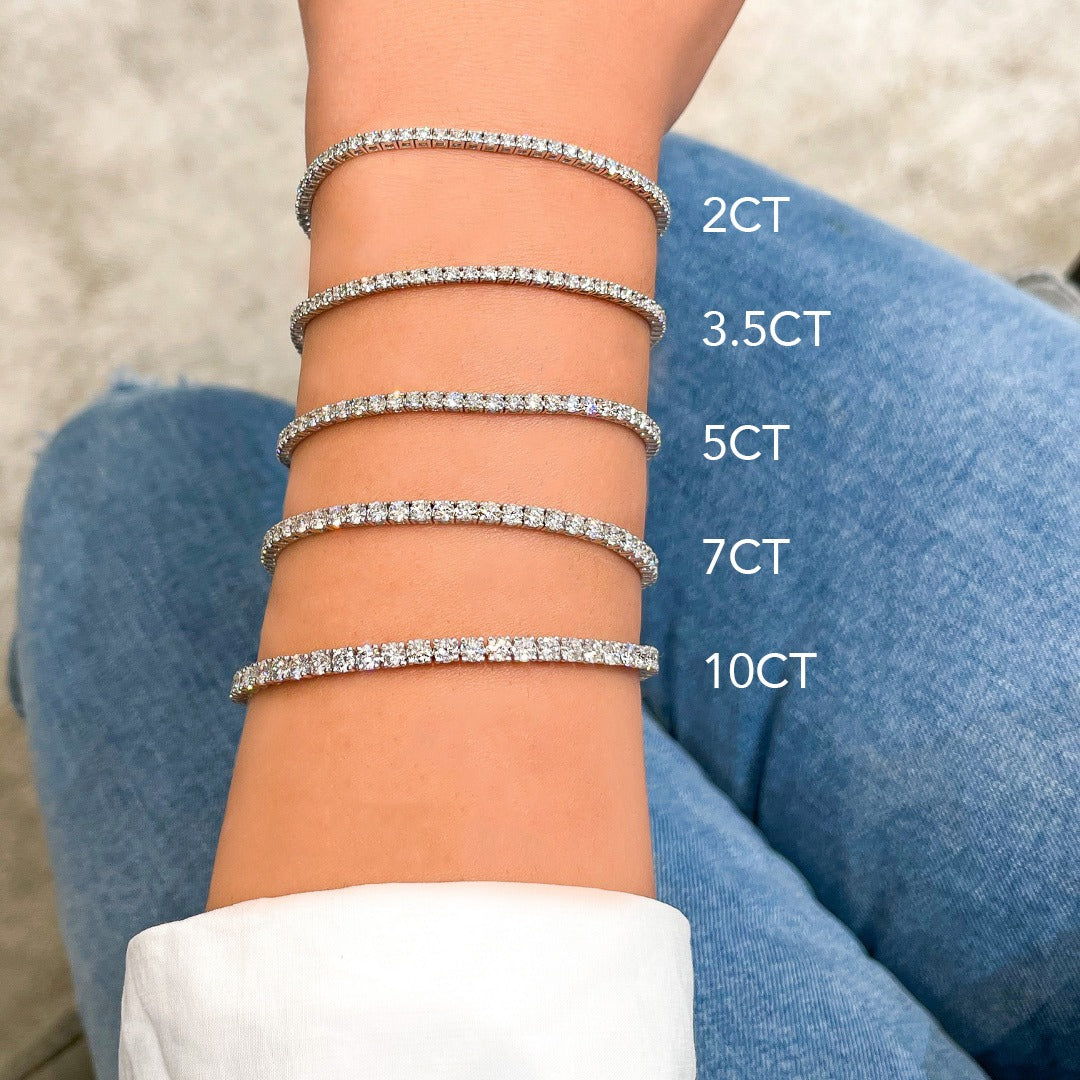
At the wrist, bracelet stacking follows the same logic as ring stacking: vary the weight and texture. A fine solid gold bracelet alongside a diamond tennis bracelet gives you contrast without competition. The 3-Prong and 4-Prong Tennis Bracelets are strong anchors for a wrist stack, with the flexibility to layer a plain bangle or solid gold bracelet on either side.
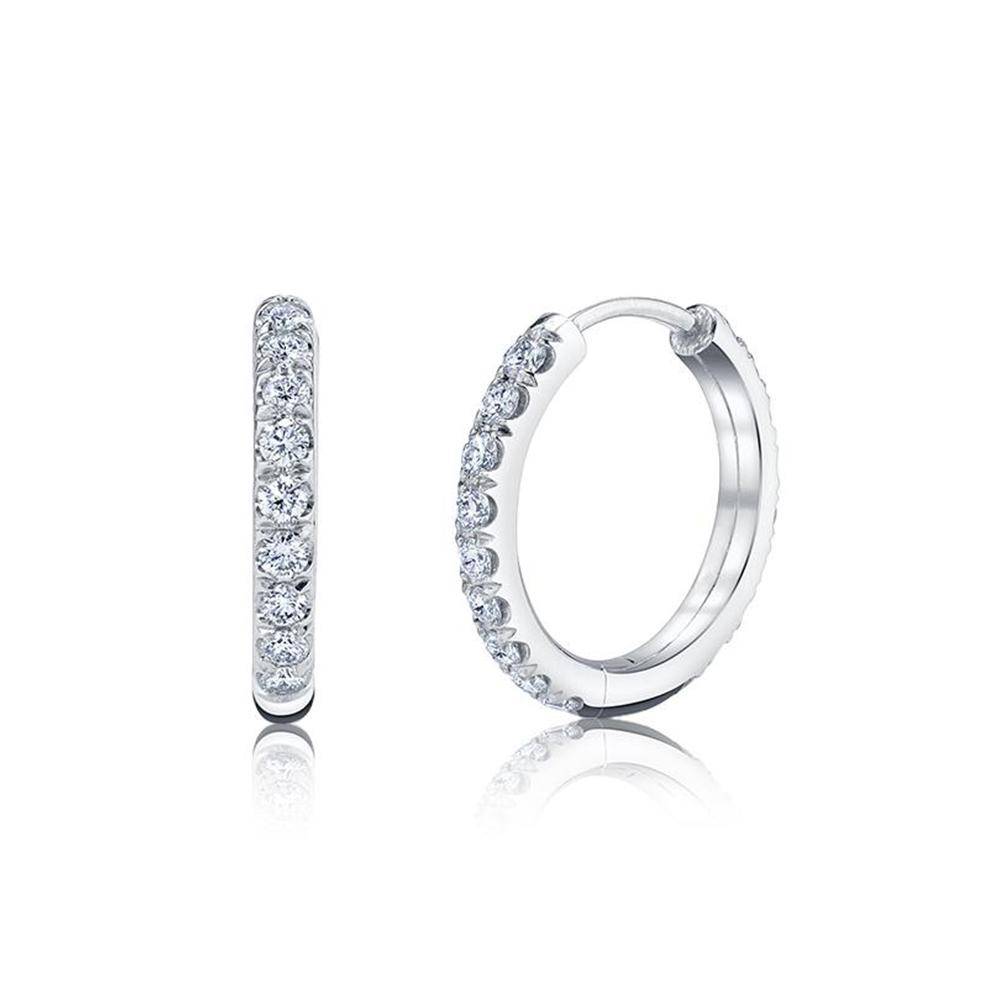
For earring stacking, the most wearable approach is a stud in the first lobe piercing and a huggie or small hoop in a second. The Mia Diamond Huggies and the Cristina Diamond Huggies both work perfectly in this format: close-sitting, diamond-set, and scaled to sit neatly alongside a stud without crowding the ear.
Shop the Mia Diamond Huggies
Shop the Cristina Diamond Huggies
Caring for a Daily Stack
Stacked rings are the jewellery most likely to show wear over time, because they are constantly in contact with each other. The main thing to know is that softer metals and stones will scratch against harder ones, so the order and pairing of your pieces matters beyond aesthetics.
Rings that spin are almost always a sizing issue. A ring that fits correctly in isolation may move on the finger when flanked by two others that narrow the space. The solution is to size each ring individually with your stack in mind, rather than sizing in isolation. Our team can advise on this at any fitting appointment.
For cleaning, remove your stack once a week and clean each piece individually with warm water and a soft cloth. Avoid ultrasonic cleaners for pieces with pavé settings or coloured stones. Store stacked rings separately when not wearing them to prevent the pavé diamonds on one ring from scratching the surface of another.
The investment in regular care pays back in longevity. A well-maintained stack at 10 years looks almost identical to one at one year.
Book a Styling Appointment with Armans Fine Jewellery
FAQs About Jewellery Stacking
How do you stack rings with an engagement ring?
The best way to stack rings with an engagement ring is to treat the engagement ring as the anchor and build outward on either side. A plain wedding band on one side and a slim pavé or textured band on the other is the most common starting point. Keep the stacking rings slightly slimmer than the engagement ring so it remains the focal piece.
How many rings can you stack on one hand?
For everyday ring stacking, two to three rings on one hand tends to look considered and polished. For a more deliberate maximalist look, four to five can work well, spread across multiple fingers. The key is varying the width and texture of each piece so they read as a curated stack rather than a random collection.
Can you mix gold and silver when stacking jewellery?
Yes. Mixing metals is one of the most popular approaches to gold stacking rings and layered jewellery. Yellow and white gold is the most versatile combination. Rose and yellow gold share enough warmth to work naturally together. Mixing all three metals is bolder but works when the pieces share a consistent design aesthetic.
How do you stop stacked rings from spinning?
Stacked rings spin when they are slightly too large, a fit that works in isolation but becomes loose when flanked by other pieces. The best solution is to have each ring in your ring stack sized with the full stack in mind rather than individually. Our team can advise on this at any fitting appointment.
How do you layer necklaces of different lengths?
The key to how to layer necklaces is clear length separation. Each piece should sit at a noticeably different point on the body, ideally at least 5cm apart. A 40cm choker or pendant, a 45cm chain, and a 50cm or longer tennis necklace or pendant gives three clean, distinct layers that don't overlap or bunch together.
Whether you are building your first ring stack or adding to a collection you have been curating for years, our team is here to help. Visit us at our Sydney CBD boutique or book a styling appointment to find the pieces that work for you.
About the Author
Aris Arzumanian
Aris Arzumanian is Co-Owner and Director of Armans Fine Jewellery, the family-run Sydney atelier founded by his father, Arman. With expertise in design, gem selection, and bespoke craftsmanship, Aris has helped grow Armans into one of Australia’s leading jewellery brands. Featured in Daily Mail and Man of Many, he’s recognised for modernising the business through digital innovation and client collaboration. Working alongside his father and brother Levon, Aris continues the family legacy, combining traditional artistry with contemporary design.